
Rediscovering the Roots of Roguelikes: A Modern Player’s Deep Dive into Rogue (1980)








Popular Now
 Among Us
 Free Fire
 Minecraft
 Candy Crush Saga
 The Legend of Zelda
 Rust
Rust
 Grand Theft Auto V
 Valorant
 Stumble Guys
 Geometry Dash
The Genesis of a Genre: My First Foray into Roguelikes with the Timeless Rogue (1980)
For many years, the enigmatic allure of the roguelike genre remained just beyond my gaming horizon. Tales of brutal difficulty, irreversible consequences, and procedurally generated labyrinths sparked a curiosity that eventually led to a decisive step: bypassing contemporary titans like Hades or Dead Cells, I committed to starting at the source – the original Rogue (1980). This wasn’t merely a playthrough; it was an archaeological expedition into the very foundations of a gaming philosophy, an exploration into how core mechanics established over four decades ago continue to influence game design today. My journey into the depths of Rogue’s dungeon was a profound lesson in gaming history, revealing the raw, unpolished brilliance that defined a generation and shaped countless future experiences.
Unpacking the Core Mechanics: What Makes Rogue (1980) an Enduring Challenge?
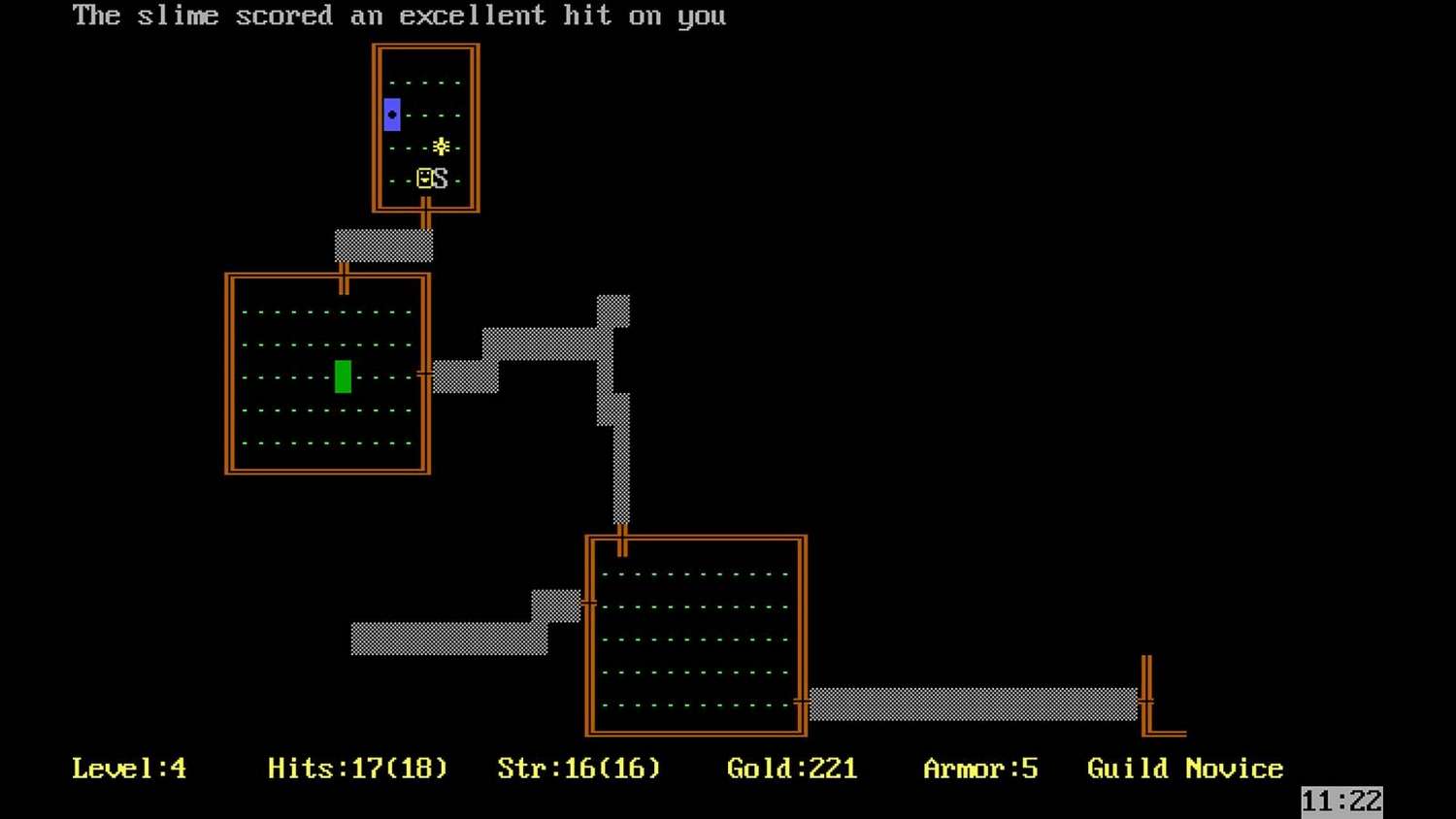
From the moment the ASCII interface greeted me, the stark realities of Rogue’s design became apparent. This was not a game for the faint of heart or the impatient. Its mechanics, while seemingly simple on the surface, coalesce into a deeply strategic and unforgiving experience. Understanding these foundational elements is crucial for any newcomer attempting to navigate its treacherous levels:
- Permadeath: The Ultimate Consequence: This is arguably Rogue’s most defining feature. Every death is final, erasing all progress, inventory, and character development. This singular rule instills a profound sense of caution, making every decision, every combat encounter, and every potion identification a high-stakes gamble. It transforms the act of playing into a constant negotiation with potential failure, fostering an intense emotional investment in each run. This concept alone reshaped what challenging PC games could be.
- Procedural Generation: An Ever-Changing Labyrinth: No two playthroughs of Rogue are ever truly the same. The dungeon layouts, monster placements, and item distributions are randomized with each new game. This ensures replayability and prevents memorization, forcing players to adapt on the fly and make tactical decisions based on unpredictable circumstances. It’s a masterclass in providing endless content through relatively simple means, a principle that underpins many successful indie game development projects today.
- Turn-Based Combat and Strategic Movement: Unlike real-time action RPGs, Rogue operates on a turn-based system. Every step, every attack, every spell cast consumes a turn, allowing players ample time to assess their surroundings and plan their next move. This encourages meticulous spatial awareness and tactical positioning, turning combat into a cerebral chess match against increasingly powerful foes. It’s a testament to strategic gameplay that doesn’t rely on reflexes.
- Resource Management and Item Identification: The dungeon is rife with unidentified items – potions, scrolls, rings, and wands. Their effects are unknown until used or identified through specific means, adding an element of dangerous discovery. Managing limited food supplies, healing potions, and weapon durability is paramount. Poor resource allocation often leads to inevitable demise, reinforcing the game’s brutal difficulty and demanding constant vigilance. This creates a deep layer of RPG elements.
- Hidden Information and Learning Through Failure: Rogue thrives on mystery. Beyond unidentified items, enemy strengths, trap locations, and environmental hazards must often be learned through direct, often painful, experience. Each death is a lesson, slowly building a mental database of what works and, more importantly, what doesn’t. This feedback loop, though harsh, is incredibly compelling, making the rare successes feel profoundly earned.
Rogue’s Enduring Legacy: Shaping the Future of Gaming
To call Rogue (1980) merely a game would be an understatement; it is a monument in gaming history. Developed by Michael Toy, Glenn Wichman, and Ken Arnold, its innovative approach to dungeon crawling laid the groundwork for an entire genre. Its influence is not confined to direct descendants like NetHack or Angband; its tendrils stretch far wider, impacting the design philosophy of countless RPGs, action games, and even modern adventure titles. Elements of procedural generation and permanent consequences can be seen in everything from Diablo’s randomized dungeons to the permadeath mechanics in survival games. The concept of character progression tied to iterative runs, perfected in modern roguelites, owes a direct debt to Rogue’s relentless cycle of failure and learning. It proved that deep engagement could be achieved with minimal graphical fidelity, focusing instead on robust mechanics and player imagination, a principle still cherished by many retro gaming enthusiasts and independent developers.
The Learning Curve: Navigating the Dungeons of Despair as a Novice
My initial hours with Rogue were, predictably, a continuous sequence of swift, humiliating deaths. Kobolds, Trolls, and eventually, the dreaded Dragons quickly dispatched my fledgling adventurers. The frustration was palpable, yet strangely compelling. Each run offered a new dungeon, a new set of challenges, and a fresh opportunity to apply lessons learned. I slowly began to grasp the nuances: the importance of kiting enemies, conserving identified healing potions, wisely using scrolls of ‘Teleportation’, and understanding which enemies to avoid entirely. The sense of discovery, even in a game from 1980, was immense. Uncovering a powerful weapon or a scroll that cleared an entire room of monsters felt like a genuine triumph, starkly contrasting the ease of progression in many contemporary titles. This extreme **high difficulty** is part of its charm.
Rogue (1980) in the Modern Era: A Timeless Challenge for the Discerning Gamer
How does a game designed for mainframe terminals over four decades ago stand up to the polished experiences of 2024? Surprisingly well, for the right audience. For those accustomed to hand-holding tutorials and forgiving save systems, Rogue will be a stark, perhaps even brutal, awakening. However, for hardcore gamers seeking a genuine challenge, for students of game design looking to understand foundational principles, or for anyone intrigued by the **evolution of gaming**, Rogue offers an unparalleled experience. Its stripped-down nature forces players to engage purely with its mechanics, fostering a deeper appreciation for strategic thinking and resourcefulness. It’s a reminder that compelling gameplay isn’t about graphical fidelity, but about well-crafted systems and the inherent joy of overcoming adversity. This makes it one of the original best roguelikes.
Conclusion: The Enduring Appeal of Unrelenting Difficulty
My journey into the original Rogue has been far more than just playing an old game; it has been an education. It’s revealed why the roguelike genre continues to captivate millions and how its core tenets of permadeath, procedural generation, and tactical decision-making remain potent forces in interactive entertainment. For anyone serious about understanding the lineage of video games, or simply seeking a deeply challenging and endlessly replayable dungeon crawler experience that demands intellect over reflexes, picking up Rogue (1980) is an essential pilgrimage. It’s a testament to timeless design, proving that true innovation transcends eras, offering insights and enjoyment that resonate just as powerfully today as they did when first released into the digital wilderness.